The Spaces of the Atelier
The atelier is not understood here as a single room or fixed address, but as an evolving environment shaped through years of movement between places, materials, disciplines, and ways of living. Across studios in Cambridge, Florence, Plymouth, Boston, and beyond, the practice has developed through a continuous dialogue between fashion, printmaking, installation, photography, craftsmanship, research, and daily life. Each space has functioned simultaneously as workshop, laboratory, archive, salon, and living environment — places where garments, artworks, objects, and ideas emerge gradually through process, experimentation, and sustained attention to material.
Rather than separating art from utility or presentation from production, the atelier operates as an integrated creative ecosystem in which making itself becomes part of the atmosphere of the work. Fabrics, monotypes, sketches, ceramics, tools, reference books, unfinished pieces, conversations, exhibitions, fittings, and collected objects coexist within spaces that remain intentionally alive and in motion. The environments documented here reflect different stages in the development of the practice: from intimate underground studios and Florentine workrooms to waterfront ateliers and public-facing cultural salons. Together they form an ongoing geography of making rooted in craftsmanship, observation, experimentation, and the belief that creative work is inseparable from the spaces and rhythms through which it is lived.
Cambridge
Located near Harvard Square in Cambridge, Massachusetts, the early MYA ROYAL atelier emerged within a modest studio apartment that gradually transformed into a fully immersive creative environment balancing fashion, fine art, research, and daily life. Developed during an intensely formative stage of the practice, the space functioned simultaneously as living quarters, sewing studio, printmaking workspace, conceptual laboratory, and photographic setting. Surrounded by the intellectual atmosphere of Cambridge — universities, bookstores, independent cafés, galleries, and constant academic movement — the atelier became deeply shaped by conversations between art, philosophy, literature, performance, and material experimentation.
Garments, monotypes, sketches, fabrics, reference books, mannequins, and works in progress accumulated organically throughout the small interior, creating an atmosphere of constant inquiry and invention rather than polished presentation. The boundaries between disciplines remained intentionally fluid: printmaking informed textiles, drawing informed silhouette, and installation informed the atmosphere of the garments themselves. Long nights of handwork, experimentation, study, and self-directed production defined this period, establishing many of the conceptual foundations that would later expand into larger public ateliers and multidisciplinary cultural spaces.
Florence
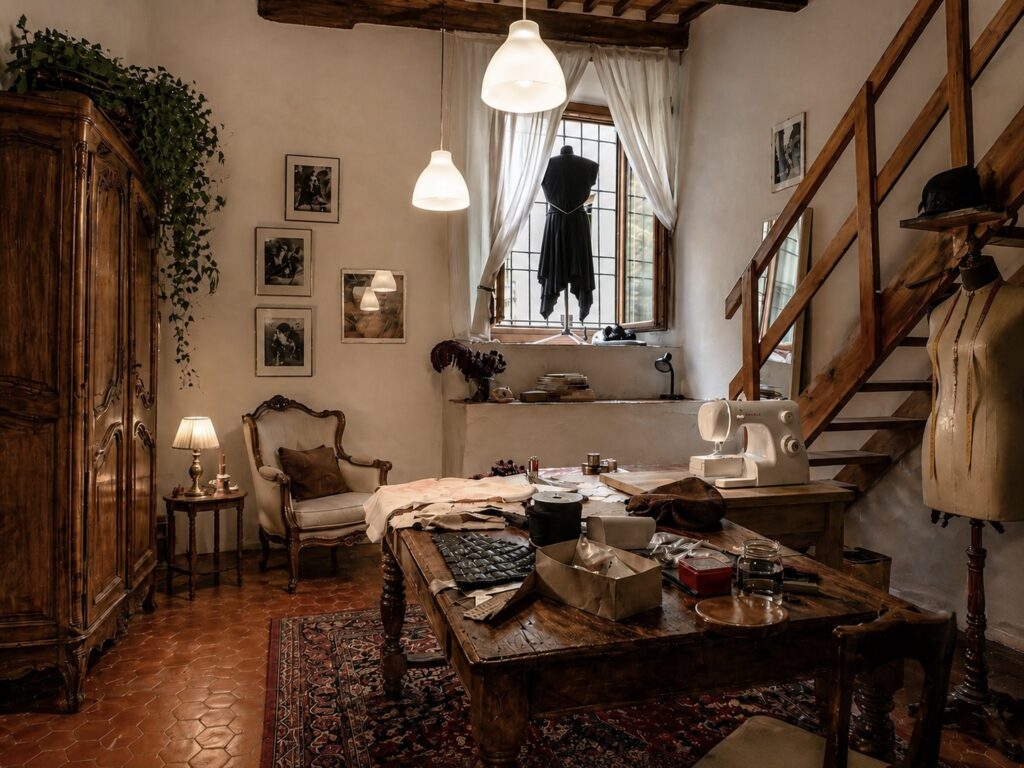
Established in the historic center of Florence near Santa Croce and Via dei Neri, the Florence atelier marked the transition from student experimentation into an increasingly defined independent couture practice. Emerging during and after studies at Accademia Italiana, the space developed within the dense artistic and architectural fabric of the city itself — surrounded by Renaissance workshops, artisan leather studios, historic tailoring traditions, churches, narrow stone streets, and the layered visual memory of Florence.
The atelier operated as both production space and intimate boutique, where handmade garments, textile experimentation, fittings, sketches, and evolving collections unfolded within a distinctly Florentine atmosphere shaped by craftsmanship and historical continuity. The relationship between body, architecture, and material became increasingly central during this period, influenced equally by Italian sartorial traditions and contemporary artistic inquiry. Daily life in Florence — conversations with artisans, movement through historic streets, museum visits, language studies, and encounters with the city’s visual culture — became inseparable from the development of the work itself.
Rather than imitating historical fashion romanticism, the atelier sought a contemporary dialogue with Florence: one grounded in slow craftsmanship, material sensitivity, intellectual rigor, and the experience of building an independent creative identity within one of the world’s most historically charged artistic environments.
Plymouth
Located above Plymouth Harbor on the historic Massachusetts waterfront, the Plymouth atelier operated as a large-scale working studio dedicated to experimentation, production, and multidisciplinary creative development. Unlike the more public-facing atmosphere of the Boston salon, this space emphasized process: patternmaking tables, sewing stations, textile development, printmaking, photography sets, prototypes, fittings, and evolving collections occupied the expansive open interior simultaneously. Coastal light entered through large harbor-facing windows while garments, artworks, reference materials, and unfinished ideas accumulated across the studio in visible layers of ongoing work. During this period, the practice expanded significantly in both scale and technical ambition, with couture, performance garments, monotype textiles, editorial production, and independent research all unfolding within the same environment. The atelier became less a showroom than a living laboratory for fashion, image-making, and material experimentation rooted within the atmosphere of coastal New England.
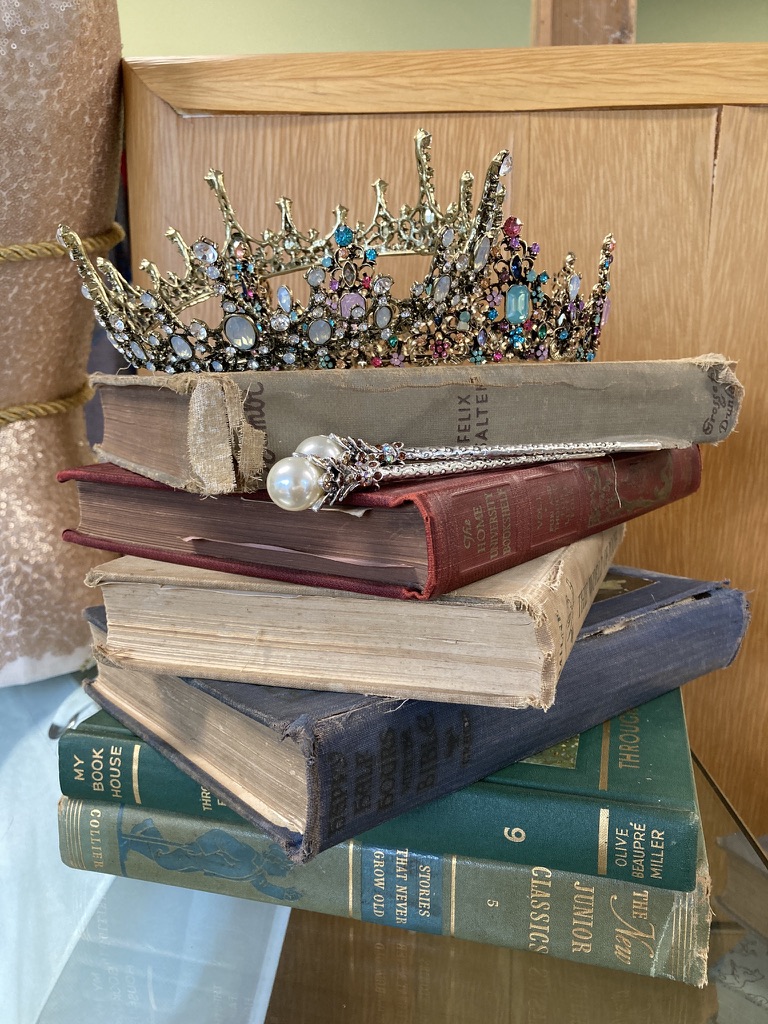
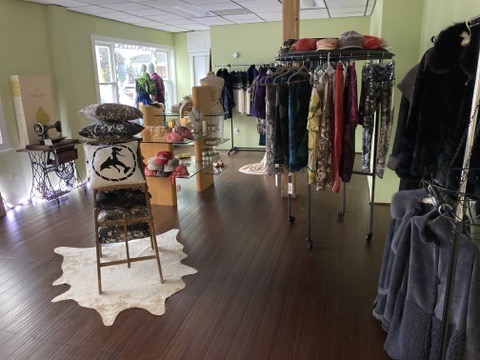
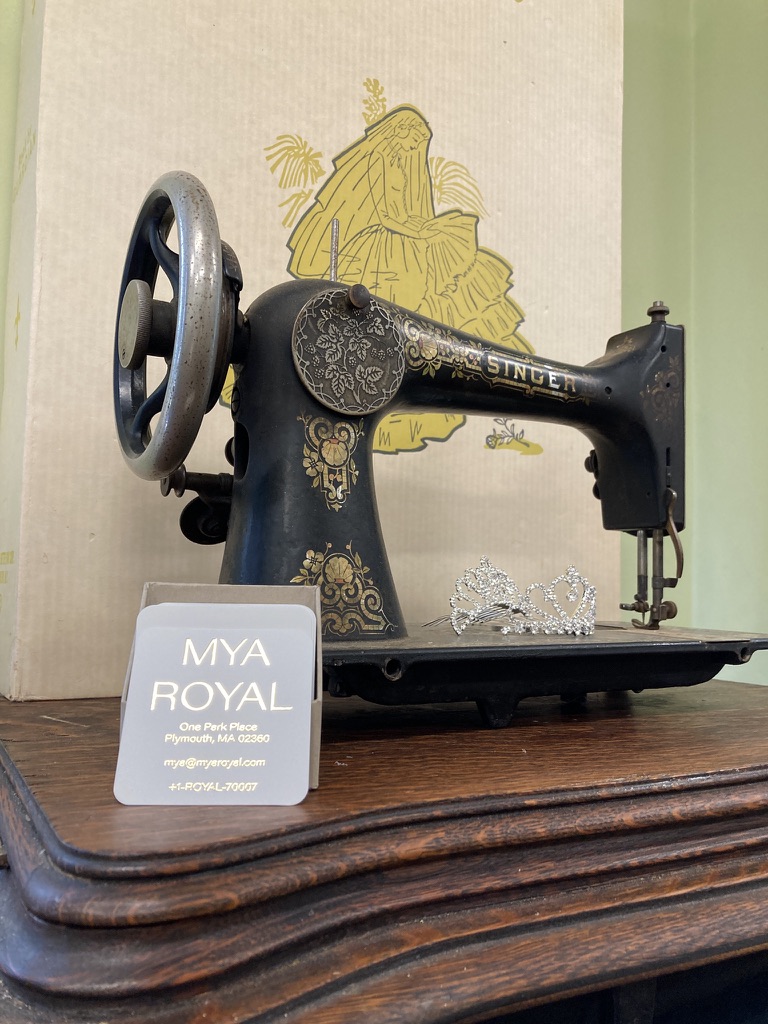
Positioned at street level near Plymouth Harbor, the MYA ROYAL boutique developed as an intimate public extension of the atelier above: part couture showroom, part artisan shop, part creative salon, and part evolving installation. The space brought together garments, handmade accessories, monotype textiles, hats, jewelry, books, objects, and collected materials within an environment that felt deeply personal and continuously in motion. Rather than separating fashion from daily life, the boutique embraced the atmosphere of a working independent practice rooted within a historic waterfront town. Conversations, fittings, styling experiments, small events, and spontaneous encounters unfolded naturally within the space, creating a world that balanced craftsmanship, artistic experimentation, and the warmth of coastal New England hospitality.
Boston
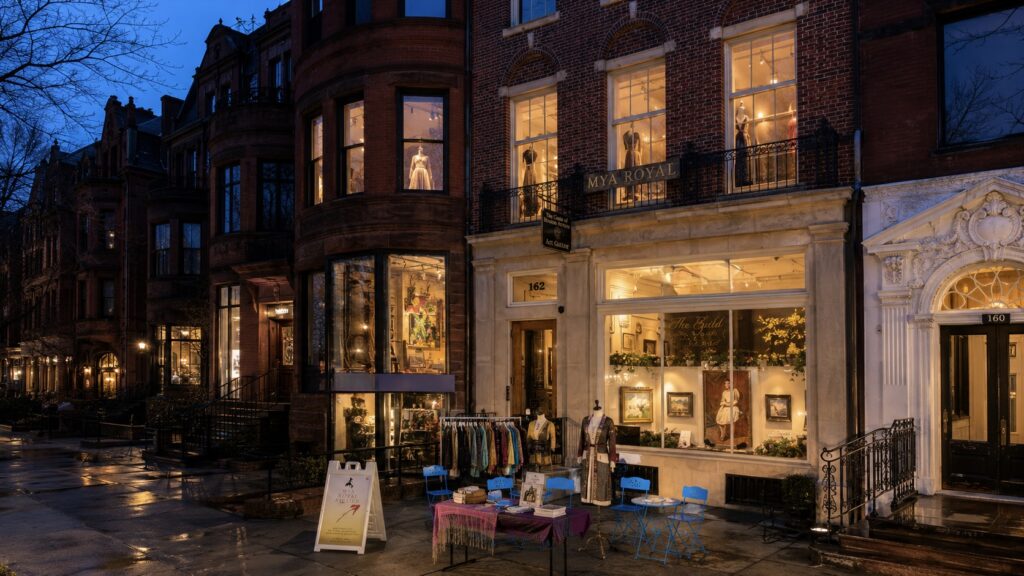
Situated within the historic Guild of Boston Artists building on Newbury Street in Boston’s Back Bay, the MYA ROYAL atelier functioned simultaneously as couture studio, contemporary salon, gallery, boutique, and cultural gathering space. Occupying the second floor above one of the city’s oldest artist institutions, the atelier emerged during a period of growing public visibility for the practice, when fashion, printmaking, installation, photography, and community events increasingly converged into a unified environment. Large townhouse windows overlooked the movement of Newbury Street below while garments, monotypes, accessories, textiles, and works in progress continuously evolved throughout the interior. Fittings, exhibitions, editorials, intimate receptions, and experimental production all unfolded within the same layered space, creating an atmosphere that felt less like a conventional luxury boutique and more like an independent cultural residence dedicated to craftsmanship, artistic exchange, and contemporary fashion as lived experience.